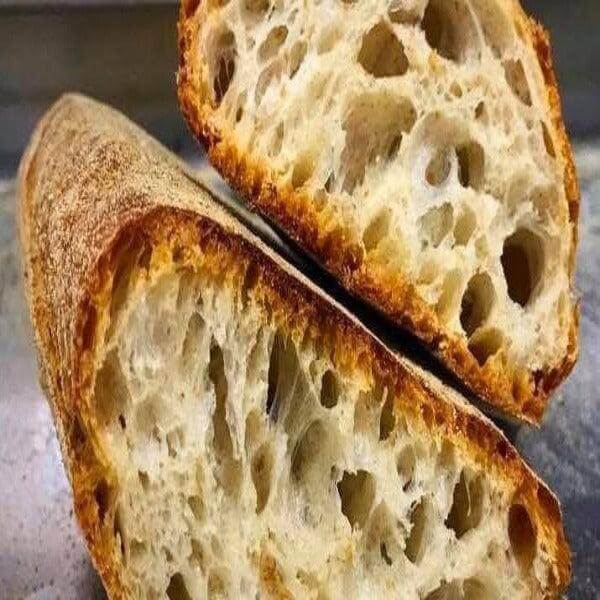
Homemade bread from Calabria
Homemade bread from CalabriaCalabrian bread has the ancient flavour of Magna Graecia and brings with it identity and tradition in its complex anthropological symbolism of sociality, sharing and religion. In Calabria, tradition dictates that a cross-shaped cut is made in the bread when it is left to rise, and sometimes a blessed olive branch is put inside.
Bread should not be thrown away, if it falls, it should be picked up from the ground and kissed, if it is accidentally placed on the table upside down, it should be turned over and kissed; during the festivities, special breads are made as a sign of devotion and offered in church or to friends and relatives. The levatina, the magic sourdough used to make u pani i casa, was passed from woman to woman and each of them took care of it to then make bread for their own family; those who had an oven gave it to women who didn't.
Bread was thus a collective rite, a food that feeds the soul... All Calabrians carry its fragrance and memories inside them forever. To honour the memory of their ancestors and to restore body and spirit, the ancient rite of preparing bread can be repeated today, to be done at home and at any latitude. a whole loaf weighs about 1.5 kg
Ingredients and allergens
Ingredients and allergens
Il Pane Casereccio Calabrese è l'emblema della panificazione rustica del Sud Italia. Caratterizzato da una crosta spessa e croccante e una mollica alveolata ma consistente, è un prodotto progettato storicamente per durare molti giorni. Ecco la scheda tecnica completa, ottimizzata per la vendita e il posizionamento online. Identità del Prodotto 1. Ingredienti e Allergeni Ingredienti: Semola rimacinata di grano duro (spesso varietà locali come il Senatore Cappelli), acqua, lievito naturale (lievito madre o criscito), sale marino. Allergeni: Contiene Glutine. Può contenere tracce di sesamo o frutta a guscio (se lavorato in laboratori pro
Nutritional values
Nutritional values
Valore Energetico 265 kcal / 1120 kJ Grassi 1.2 g di cui acidi grassi saturi 0.2 g Carboidrati 52 g di cui zuccheri 2.0 g Fibre 3.5 g Proteine 9.5 g Sale 1.4 g
Origin and production
Origin and production
Origine: Calabria, Italia. Zone di eccellenza: Cerchiara, Mangone, Rogliano e l'area del Crotonese. Metodo di Produzione: Lievitazione Lenta: Utilizzo del lievito madre che garantisce una fermentazione di almeno 8-12 ore, rendendo il pane altamente digeribile. Lavorazione: Impasto energetico e formatura manuale delle pagnotte (che possono arrivare a pesare anche 2-5 kg). Cottura: Tradizionalmente eseguita in forno a legna a fuoco diretto (spesso con legno di faggio o castagno), che conferisce alla crosta quel tipico profumo di tostato e affumicato. 3. Tabella Valori Nutrizion
Shipping and storage
Shipping and storage